

Recovery Track FAQs
Performance & Recovery Capability
Yes—when used correctly, they are highly effective in soft sand recoveries.
The aggressive U-shaped teeth are designed to dig into sand and create forward traction when your tyres are spinning or bogged.
For best results:
• Clear sand in front of the tyres using the built-in shovel edge
• Place tracks firmly in line with the drive wheels
• Lower tyre pressure before recovery (if possible)
• Apply steady, gentle throttle (avoid wheel spin)
Performance will depend on sand depth, tyre pressure, and how bogged the vehicle is.
The aggressive U-shaped teeth are designed to dig into sand and create forward traction when your tyres are spinning or bogged.
For best results:
• Clear sand in front of the tyres using the built-in shovel edge
• Place tracks firmly in line with the drive wheels
• Lower tyre pressure before recovery (if possible)
• Apply steady, gentle throttle (avoid wheel spin)
Performance will depend on sand depth, tyre pressure, and how bogged the vehicle is.
Yes. For most recreational and touring setups, the 10-ton rating provides a strong safety margin.
A loaded LandCruiser 200 Series is around 3–3.5 tons, and even with a trailer, total static weight remains well within rating limits.
Keep in mind:
• Rating refers to static load on flat ground
• Recovery forces increase on slopes or deep mud
• Proper placement and technique are essential
A loaded LandCruiser 200 Series is around 3–3.5 tons, and even with a trailer, total static weight remains well within rating limits.
Keep in mind:
• Rating refers to static load on flat ground
• Recovery forces increase on slopes or deep mud
• Proper placement and technique are essential
Yes. These recovery boards are designed for multiple terrain types including:
• Soft beach sand
• Wet grass and paddocks
• Muddy tracks
• Rocky or uneven surfaces
However, extremely deep mud or chassis-high bogging may require additional tools such as a jack or winch.
• Soft beach sand
• Wet grass and paddocks
• Muddy tracks
• Rocky or uneven surfaces
However, extremely deep mud or chassis-high bogging may require additional tools such as a jack or winch.
They are designed to flex under load rather than crack.
Made from reinforced polypropylene, the boards can bend significantly to adapt to uneven terrain and rocks.
However:
• Avoid spinning tyres aggressively on hard surfaces
• Do not treat them as indestructible
• Normal recovery use will maximise lifespan
Made from reinforced polypropylene, the boards can bend significantly to adapt to uneven terrain and rocks.
However:
• Avoid spinning tyres aggressively on hard surfaces
• Do not treat them as indestructible
• Normal recovery use will maximise lifespan
In typical Australian off-road conditions, they are built to handle repeated recoveries.
With normal use:
• Sand, mud, grass: long service life
• Rocky terrain: faster wear on teeth
• Careful usage extends lifespan
With normal use:
• Sand, mud, grass: long service life
• Rocky terrain: faster wear on teeth
• Careful usage extends lifespan
Yes—long-term UV exposure will eventually reduce flexibility.
If stored outdoors:
• Expect gradual aging
• 2–3 years in harsh sun may reduce flexibility
To extend lifespan:
• Store under cover
• Use a roof bag or shade
• Avoid long-term direct UV exposure
If stored outdoors:
• Expect gradual aging
• 2–3 years in harsh sun may reduce flexibility
To extend lifespan:
• Store under cover
• Use a roof bag or shade
• Avoid long-term direct UV exposure
Strength, Durability & Materials
These boards are a strong value-focused option designed for Australian conditions.
Different brands use different materials:
• Premium brands: engineered polymers
• These boards: reinforced polypropylene
For weekend touring and general 4WD use, they perform very well.
For heavy commercial use, premium alternatives may be preferred.
Different brands use different materials:
• Premium brands: engineered polymers
• These boards: reinforced polypropylene
For weekend touring and general 4WD use, they perform very well.
For heavy commercial use, premium alternatives may be preferred.
A simple and effective recovery process:
1. Clear material from in front of tyres
2. Place boards tightly against the tyre path
3. Ensure tyres are aligned straight
4. Engage low-range 4WD
5. Apply steady throttle without wheel spin
6. Maintain momentum until traction is gained
Tip: Preparation is just as important as the boards.
1. Clear material from in front of tyres
2. Place boards tightly against the tyre path
3. Ensure tyres are aligned straight
4. Engage low-range 4WD
5. Apply steady throttle without wheel spin
6. Maintain momentum until traction is gained
Tip: Preparation is just as important as the boards.
Usage, Recovery Technique & Safety
For most recoveries, one pair is sufficient.
You may need more if:
• Open diff vehicle with single-wheel spin
• Extremely deep bogging
• Vehicle is chassis-grounded
For touring, one pair is standard.
You may need more if:
• Open diff vehicle with single-wheel spin
• Extremely deep bogging
• Vehicle is chassis-grounded
For touring, one pair is standard.
Do not:
• Use as a high-lift jack base
• Spin tyres at full throttle on hard surfaces
• Attempt to bridge large gaps
• Leave exposed to harsh UV long-term
• Use as a high-lift jack base
• Spin tyres at full throttle on hard surfaces
• Attempt to bridge large gaps
• Leave exposed to harsh UV long-term
They are designed with an underside pattern to improve ground grip.
In most sand and mud conditions, they remain stable.
However:
• Wet clay or ice may reduce grip
• Correct placement is essential
In most sand and mud conditions, they remain stable.
However:
• Wet clay or ice may reduce grip
• Correct placement is essential
Most failures are technique-related.
The most common issue:
Not clearing enough material before placing the board.
Recovery boards are traction aids—not lifting tools.
The most common issue:
Not clearing enough material before placing the board.
Recovery boards are traction aids—not lifting tools.
Size, Storage & Accessories
Each board is approximately:
• 1065 mm length
• Designed for standard 4WD tyre widths
• Lightweight and easy to handle
Large enough for effective recovery, compact enough for storage.
• 1065 mm length
• Designed for standard 4WD tyre widths
• Lightweight and easy to handle
Large enough for effective recovery, compact enough for storage.
Recommended if:
• You want quick external access
• You have limited internal storage
• You do frequent beach or touring trips
Consider alternatives if:
• You want reduced wind noise
• You prefer UV-protected storage inside a canopy or drawer system
• You want quick external access
• You have limited internal storage
• You do frequent beach or touring trips
Consider alternatives if:
• You want reduced wind noise
• You prefer UV-protected storage inside a canopy or drawer system
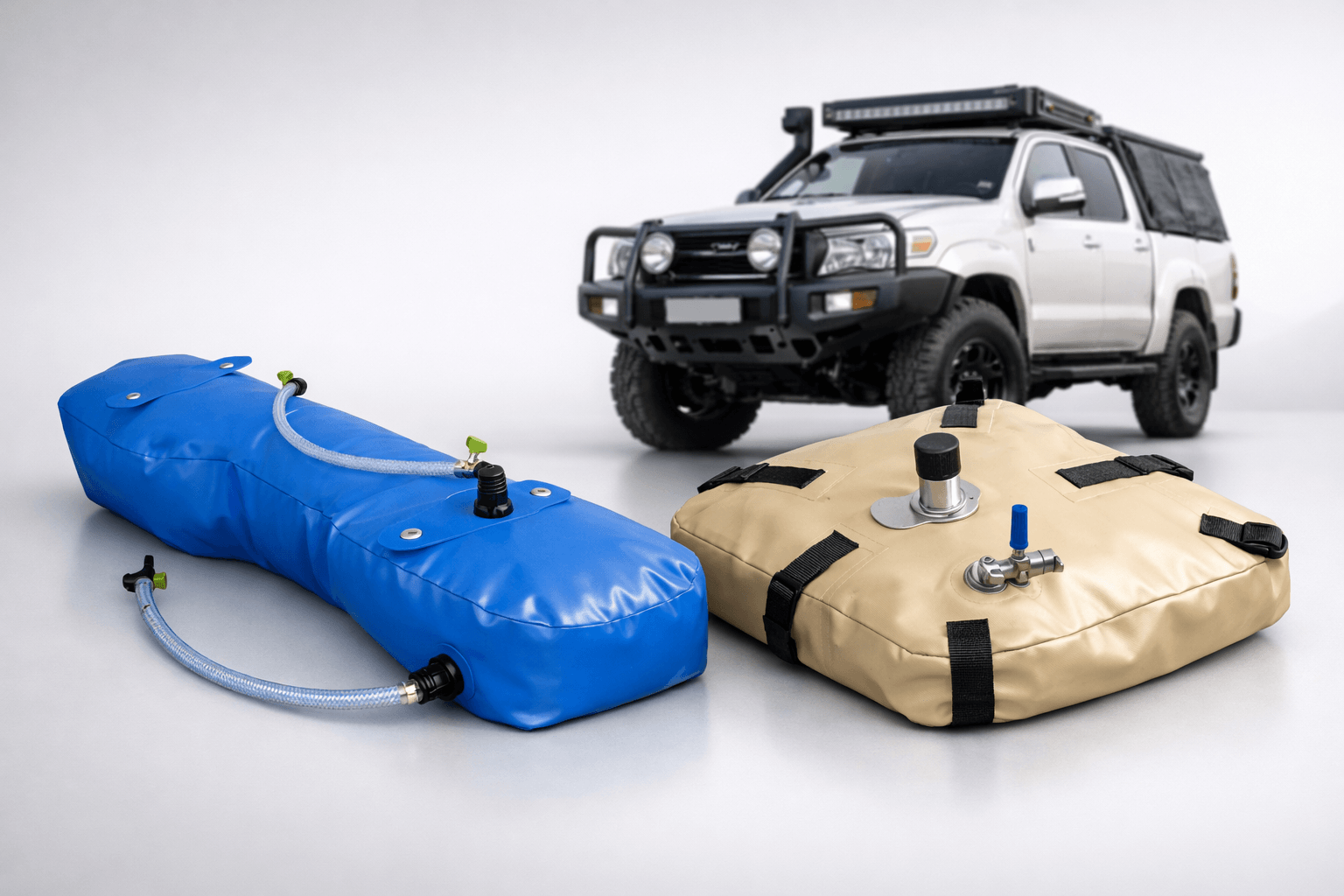
Coming Soon — Vehicle Compatibility Checker
We’re building a smart fitment tool that will allow you to choose your vehicle (Year, Make, Model, etc.) and instantly view all compatible water or fuel bladders. This will help you avoid guesswork, compare options, and ensure you pick the perfect fit for your setup.